
Why Most People Quit Sailing
Here's the dream: You buy a sailboat, quit your job, and sail off into the sunset. Freedom. Adventure. Living your best life.
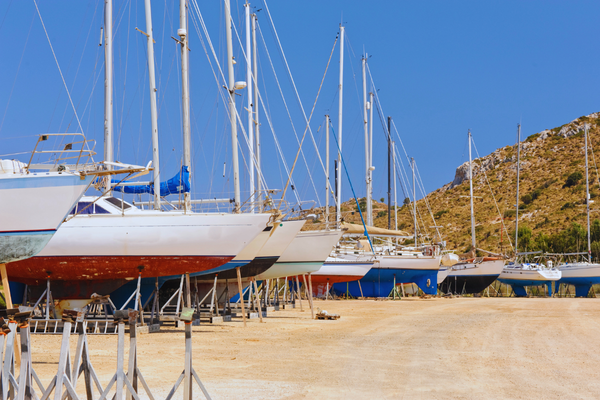
Here's the reality: Within a few years, that same boat is either sitting unused on a trailer, rotting at an abandoned marina, or—if you're really unlucky—still yours, slowly draining your bank account while you explain to your spouse why you can't sell it for half what you paid.
The numbers don't lie. Sailboat registrations in America's biggest sailing cities have dropped 34% in just over a decade.
The average sailboat is now 34 years old. For every new sailor entering the sport, four boats are being scrapped. Something's broken.
The Money Trap
One of the biggest reasons why the majority of people quit sailing is down to finances.
Most people think they have enough for the boat and even accounted for maintenance, but they underestimate the maintenance costs or underestimate their ability to keep earning while aboard.
Sure, we've all seen the big YouTube channels that sell the dream, but they're only a handful compared to the numbers of people who quit.
So if your idea is to start a YouTube channel to finance your sailing dream, I've got bad news for you. I'm not saying it won't work, but it will be hard.
If we look at the numbers, they don't lie. Let's say you buy a modest 35-foot cruiser for $75,000.
On top of that, you have marina fees averaging $2,500-$5,000 annually (depending on location), insurance around $1,200-$2,000, haul-out and bottom paint every 1-2 years ($1,500-$3,000), and diesel costs that can easily hit $1,500-$3,000 per year even on a "sailboat."
So in total, you're looking at yearly fees in the region of $15,000-$25,000—and that's assuming nothing major breaks.
This is the number one reason why people quit. However, if you know all this going in, you're less likely to quit.
Or at least you'll quit with your eyes open instead of drowning in unexpected bills.
The Project That Never Ends
I honestly almost got stuck in this one myself. A beautiful steel Bruce Roberts that was almost finished.
I thought, park it in a boatyard in Spain—it's cheap, the weather is good, I could work year-round and get it done in no time.
The truth is, had I gone that way, I probably would never have sailed. I should mention that the boat was for sale by the family of a man who sadly passed before finishing the project. That should have been my first clue.
But then there's the other side of maintenance—the sailors who are actually out there living the dream until they realize their time is consumed by another engine job, or even worse, a haul-out to fix a propeller.
And while it's out, they might as well do the rudder, repaint, anti-foul...
They spend more time working on the boat than sailing it. And this is before they even think about refitting, which most people do.
The forums are full of stories: "Just need to fix this one thing before we can leave." Two years later, they're still in the same marina, elbow-deep in another project.
The boat becomes a tyrant. Saturday mornings stop being about sailing and start being about discovering three new problems while fixing one old one.
Eventually, you realize you don't own the boat—the boat owns you.
When Life Gets in the Way
This is the one that catches most people off guard and not really one you can plan for.
Most people underestimate the loneliness of sailing. Sure, there are many great people you'll meet along the way, but they're not family or old friends, and for many that becomes overwhelming.
You're making connections in anchorages, then everyone disperses. You're always the newcomer.
The cruising community is warm and welcoming, but it's also transient. When something goes wrong—really wrong—you realize how far you are from your support network.
Then there are other things, like having a baby. This one even caught up with popular sailing YouTubers Teulu Tribe, who returned to land life.
However, for other people like the author of the book "Thicker Than Ice," having children was the motivation they needed to go.
But health issues are a different beast and one that can stop you in your tracks.
A sailing forum regular mentioned his friend sold his boat when his wife needed a double lung transplant—she loved sailing, but reality intervened.
Others face aging parents who need care, unexpected diagnoses that require proximity to specialists, or simply the realization that climbing in and out of a dinghy at 65 isn't as romantic as it sounded at 45.
And sometimes it's simpler than that: Your marina closed. Your slip is now 25 miles away.
That 30-minute drive each way turns weekend sails into logistical nightmares. Life doesn't have to throw you a catastrophe—sometimes it just makes things incrementally harder until one day you look at your boat and think, "I haven't been out in three months."
The Cruel Irony
Here's the part nobody talks about: Sometimes buying a boat kills your love of sailing.
You bought the boat to go sailing. But now you're too busy maintaining it to actually sail it.
Or you're living aboard, so the idea of "going for a sail" means untying your house, putting everything away, disconnecting shore power, and hoping nothing breaks while you're out there.
Forum users call it "the trailer trap"—boats that sit on trailers at home because launching them is such a production.
But liveaboards face their own version: the dock trap. They're surrounded by water but never sailing because the boat has become their home, their office, their entire world.
The romance dies under the weight of practicality.
One sailor put it perfectly: "Come on, honey, let's untie the house and go for a spin."
When your boat stops being an escape and becomes your responsibility, something fundamental shifts.
The Instagram Lie
Let's be honest about something: Social media has warped expectations.
You scroll through Instagram and see endless sunset cocktails, dolphins swimming alongside pristine hulls, couples laughing in exotic anchorages.
What you don't see: The week they spent fixing the watermaker. The stress of anchoring in 30 knots at 2am.
The relationship arguments that happen when you're living in 200 square feet. The creeping anxiety about money, weather, and whether that strange engine noise is expensive.
The YouTube sailors who make it work? They're the outliers.
For every successful cruising channel, there are hundreds of boats gathering barnacles at marinas, owned by people who discovered that living the dream is a full-time job—and not always a fun one.
So Should You Still Do It?
Look, I'm not writing this to crush dreams. I'm writing this because the sailing community does newcomers no favors by hiding the reality.
The sailors who succeed—the ones who actually make it work long-term—have a few things in common:
They're financially prepared. Not just "I saved enough to buy a boat" prepared, but "I have a budget for $20,000 in annual expenses plus an emergency fund" prepared. They know the 10% rule is just the starting point.
They're realistic about maintenance. They either have serious DIY skills or serious money to pay others. There's no middle ground. The ones who think they'll "figure it out as they go" usually end up selling the boat within two years.
They stay connected. The successful long-term cruisers maintain relationships back home, find ways to stay relevant in their communities, and don't let the boat become their entire identity. They sail to places, not away from things.
They treat it like a lifestyle, not an escape. The ones running away from problems usually find those problems follow them. The ones who sail because they genuinely love it—even the hard parts—tend to stick around.
They know when to quit. Paradoxically, the best sailors are the ones who can walk away when it stops working. They don't cling to sunk costs or romance. They recognize when the dream has run its course and move on without regret.
The sailing life isn't for everyone. The forums are full of ghosts—sailors who disappeared after their last post about "setting off next month."
The marinas are full of boats that haven't moved in years, owned by people who meant to go sailing but never quite got around to it.
But for those who go in with open eyes, who budget properly, who understand the work involved, who genuinely love the lifestyle rather than just the idea of it?
Those sailors are still out there. They're just realistic about the challenges.
And they're definitely not counting on YouTube revenue to fund their dreams.